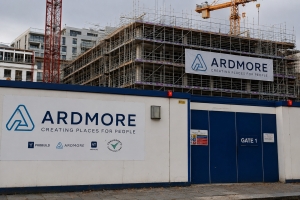
The news that construction giant Ardmore Group has entered administration has sent shockwaves through the UK construction sector. For many in the data cabling, security, AV and infrastructure markets, the collapse serves as another reminder of how interconnected the supply chain has become.
Ardmore has been one of London's best-known main contractors for decades, delivering major residential, hotel, commercial and mixed-use developments. However, mounting liabilities linked to historic building safety claims, combined with significant financial losses, ultimately pushed the business into administration. Reports suggest the group had a turnover of approximately £350 million and was actively delivering around ten major projects across London when work stopped.
Why Should Data Cabling Contractors Care?
At first glance, a main contractor entering administration may seem like a construction industry issue. In reality, specialist subcontractors are often the businesses most exposed.
Data cabling contractors typically operate several layers down the contractual chain. When a major contractor fails, it can create immediate concerns around:
- Outstanding invoices
- Retentions being withheld
- Delayed project payments
- Materials already installed on site
- Future project continuity
- Cash flow across the wider supply chain
Many structured cabling companies operate on relatively tight margins while funding labour and materials upfront. A significant unpaid debt from a major project can quickly create financial pressure, particularly for SMEs.
A Familiar Pattern Across Construction
The construction industry has witnessed several high-profile contractor failures in recent years. While every collapse has its own causes, common themes often emerge:
- Rising labour costs
- Supply chain inflation
- Fixed-price contracts
- Delayed project awards
- Historic liabilities
- Cash flow pressures
In Ardmore's case, the impact of post-Grenfell building safety legislation and fire remediation claims appears to have been a major factor. Recent court rulings widened the scope of liability, potentially exposing parent companies and associated group businesses to historic defects claims.
Immediate Impact on Live Projects
The administration leaves several major London developments in limbo while clients seek replacement contractors. Whenever a large project stalls, the knock-on effect can be significant for specialist trades.
For data cabling contractors, this may result in:
- Delayed installations
- Programme changes
- Re-scoping of works
- Re-tender opportunities
- New contractors taking over projects
While this creates uncertainty for businesses currently working on affected sites, it may also generate opportunities for contractors capable of stepping into projects at short notice.
Lessons for Data Cabling Businesses
Ardmore's collapse reinforces several important lessons for specialist contractors:
- Monitor Client Financial Health
Regular credit checks and financial monitoring are no longer optional. Many contractors appeared healthy on the surface right up until administration.
- Limit Exposure
Avoid allowing a single client or project to represent too large a percentage of turnover.
- Watch Retentions Closely
Retentions can quickly become difficult to recover once insolvency processes begin.
- Diversify Your Customer Base
Businesses supplying data centres, commercial offices, hospitality and public sector projects are generally more resilient when work is spread across multiple clients.
- Protect Cash Flow
Cash remains king. Even profitable businesses can struggle if payments are delayed or lost.
What Happens Next?
Administrators will now assess the affected Ardmore businesses, while developers and project owners seek ways to complete unfinished schemes. The wider Ardmore Group has reportedly sought a moratorium process while its position is reviewed, meaning the full picture is still developing.
For the data cabling industry, the message is clear: contractor insolvency remains one of the biggest commercial risks facing the sector. Businesses that actively manage client exposure, maintain strong cash reserves and diversify their customer base will be best placed to navigate future uncertainty.
As we've seen with several major contractor failures over recent years, even established names with decades of history are not immune to the pressures facing the UK construction market.
AI Data Centres Are Getting Out of Control: Utah Approves a Site Twice the Size of Manhattan
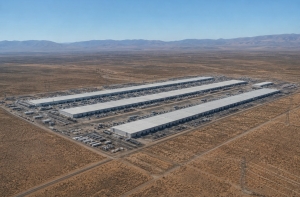
If you think today's data centres are big, think again.
A new AI data centre development approved in Utah, USA, is set to cover over 40,000 acres, making it roughly twice the size of Manhattan. Even more astonishing, the proposed campus could eventually consume up to 9 gigawatts of power, more electricity than the entire state of Utah currently uses.
Yes, you read that correctly.
As the global race for Artificial Intelligence (AI) dominance accelerates, the demand for data centre infrastructure, hyperscale data centres, and high-density computing facilities is reaching levels never seen before.
The AI Gold Rush Is Creating a Data Centre Boom
Over the last two years, every major technology company has been scrambling to build bigger and more powerful AI platforms.
Behind every AI model, chatbot, image generator and machine learning application sits an enormous amount of infrastructure.
That means more:
- Data centres
- Fibre optic networks
- Structured cabling
- Power infrastructure
- Cooling systems
- Network engineers
- Data centre technicians
- Project managers
- Commissioning engineers
The reality is that AI doesn't just run on clever software. It runs on buildings full of servers consuming vast amounts of electricity.
Why Are AI Data Centres Becoming So Large?
Traditional enterprise data centres were designed to support business applications, storage and cloud services.
Modern AI data centres are different.
Training advanced AI models requires thousands of high-performance GPUs operating around the clock. The power requirements are enormous, the cooling demands are significant, and the infrastructure needed to support them is growing at an unprecedented rate.
Many experts now believe AI will drive the largest wave of data centre construction ever seen.
The Biggest Challenge? Power.
For years, the industry has focused on finding suitable land, skilled labour and fibre connectivity.
Today, power availability has become one of the biggest obstacles facing new data centre developments.
Across the UK, Europe and North America, operators are increasingly competing for access to electrical capacity.
Without power, there is no data centre.
This is why we're seeing huge investments not only in new facilities but also in renewable energy, battery storage and grid infrastructure.
What Does This Mean for the UK Data Centre Industry?
While a project twice the size of Manhattan might seem a long way from home, the trend is already visible across the UK.
Demand continues to grow for:
- Data centre engineers
- Structured cabling engineers
- Fibre engineers
- Project managers
- Site managers
- Commissioning engineers
- M&E professionals
- Network infrastructure specialists
As AI adoption increases, organisations will require more data centre capacity, more connectivity and more technical talent to build and maintain these facilities.
The Opportunity for Employers and Candidates
For employers, the challenge will be securing skilled talent in an increasingly competitive market.
For engineers and technical professionals, the opportunities are significant.
The data centre sector is already one of the fastest-growing industries in the UK, and AI is only accelerating that growth.
Final Thoughts
A data centre larger than Manhattan sounds like something from a science fiction film.
Yet projects like this are quickly becoming reality.
Whether it's in Utah, London, Frankfurt, Dublin or Manchester, one thing is clear:
The AI revolution is driving a global data centre boom.
And for those working in data centres, structured cabling, fibre optics, networking and critical infrastructure, the future looks very busy indeed.